
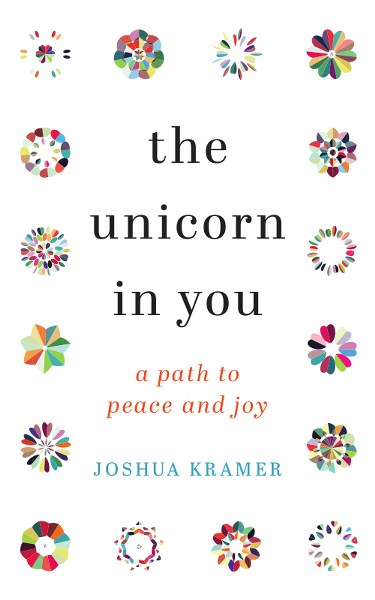
The Unicorn In You: A Path to Peace and Joy
by Joshua Kramer
Genre: Nonfiction, Self-Help, Personal Growth & Control

To be light, you first have to be solid…
Have you ever tried to find peace and joy by simply being? Or do you take a different path, instead wandering down the frustrating road of always doing?
Our pursuit of meaningful personal growth can be elusive and difficult to sustain. We search for an approach that feels natural and organic, but our success is often short lived. What if we had a foundation of values that removed this weight of expectation and emphasized a strong basis for living?
In The Unicorn in You, Joshua Kramer identifies a sensible path to peace and joy based on the fundamental principles of kindness, gratitude, integrity, humility, and acceptance. He outlines practical, actionable steps for reconnecting with these universal qualities and demonstrates how our potential extends beyond what most of us envision in our daily lives. The Unicorn in You is an inspirational guide and powerful reminder to step out of your head, build a foundation for being, and take the path less traveled to unlock a more peaceful, joyful life.
**On Sale for Only .99 cents Feb 22-Mar 1!**


On Creating An “Unself” Help Approach
“Reflecting on the processes of the self-help programs I’d studied, I found many were simply not very instinctive. To me, the real question became, how can we learn to live in an organic way, more freely and naturally, without obsessing over the results or benefits and without overanalyzing everything?
The answer: By acting in a way that is foundational to who we are. In other words, being rather than doing.
This breakthrough then prompted another significant mindset shift.
To be light, you first have to be solid.
That’s what a foundation does for you—it makes your whole life stable and solid. If we lay the right foundation for our lives, a foundation for being rather than doing, then we will be able to act naturally and live our lives in a way that is free-flowing and light, without having to overthink what we do and without having artificial processes controlling our daily routines. And so long as it’s the right foundation, this lighter, freer way of living will give us a lasting peace and joy that is more durable and sustaining.
Once I understood what I really wanted, it seemed ambitious but within reach. I now had to be clear about which principles best contributed to the right foundation. And what did I determine?
That to get to the core of what I really needed, I had to get out of my own self-absorbed head and begin focusing on being kind to others, being grateful for what I have, acting with integrity, living humbly, and accepting life as it is rather than regretting how it isn’t.
As simple as it sounds, I believe that’s the most direct path to peace and joy: kindness, gratitude, integrity, humility, and acceptance. And it’s this path that I will share with you in the following chapters.”
On Kindness
“When we sit in judgment of others, we hold on to negative emotions that are decidedly unhelpful. Condemning others,feeling angry, sad, or bitter toward them, doesn’t add anything constructive or positive to your life. So if you’re aiming for joy, you might as well let these judgments go.
The next time you look at someone, let go of the need to make any assumptions about their worth, value, or qualities. Resist the urge to respond with pessimism or negativity about them. How do you do this? As the saying goes, “Before you judge a person, walk a mile in their shoes.” Instead of making assumptions, try to understand what it would be like if you were in their place—if you’d had their experiences, feelings, struggles, and circumstances.
We all have the natural capacity to do this because we all have a sense of imagination. As a mental exercise, simply imagine changing places with other people. Think through their circumstances and try to imagine what it would feel like to experience them. Instead of taking another person’s behavior at face value, be curious about what might be going on in their life and how those factors might contribute to that behavior.
The catch is that we can never truly know what happens behind anyone’s closed doors. We never know what other people have gone through, or how they have gotten to the point in life where they’re at now. But we can learn to give people the benefit of the doubt by imagining what it would be like to switch places with them.
It might be easier to feel pessimistic toward others, but assuming the worst contributes nothing useful or productive to our lives. It certainly won’t get you closer to real, lasting peace and joy. As the famous Greek philosopher Plato avowedly said, “Be kind, for everyone you meet is fighting a hard battle.”
On Gratitude
“Gratitude makes us more in tune with the things we should be thankful for, helping us to focus on what we have instead of what we don’t have. Developing that perspective is essential for attaining peace and joy. Remember, peace and joy are less about doing and more about being. In this case, it’s a matter of perspective: be mindful and aware of the good you have and the good in the world around you to find the harmony and balance of peace.
The Greek Stoic philosopher Epictetus put it this way: “He is a wise man who does not grieve for the things which he has not but rejoices for those which he has.” Or as the journalist German Kent wrote, “It’s a funny thing about life, once you begin to take note of the things you are grateful for, you begin to lose sight of the things that you lack.”
It’s particularly impactful to remember when you wanted what you have now. Think about that. We often forget too easily that the things we have now were what we once longed for. By calling this to mind, we gain a sense of perspective that will ground us in gratitude, serving as a reminder that we should be appreciative for all that we have and not fixate on what else we desire. In short, try approaching a situation from a mindset of abundance—that is to say, knowing you already have enough.”
On Integrity
“The fuel that drives integrity is decency, which means setting a standard of right and wrong and then conforming to that standard with consistency. Decent people are honest and have clear, measurable moral principles and personal ethics that they adhere to, which gives them a sense of respectability and trustworthiness. Reliable, with a dignity that’s intact, they keep their word regardless of whether it’s convenient to do so.
If we are decent people who truly possess integrity, then we’ll live by our moral code whether no one is watching, or everyone is watching. Those with integrity wear that badge unassumingly, with a sense of being that is nonnegotiable. Former United States Senator Alan K. Simpson appropriately affirmed, “If you have integrity, nothing else matters. If you don’t have integrity, nothing else matters.”
By extension, dignity and correctness are not just ambiguous ideals without any purpose. They mean something. Consider the alternative and you’ll appreciate how essential it is for you—for all of us—to uphold our basic responsibility as human beings. Integrity that elicits decency creates the nucleus for who we are at our core. When it counts—and when it doesn’t—who are you? But, of course, it always counts.”
On Humility
“When we’re humble, we gain a healthier focus on the things that really matter. Much of the internal noise and distraction is removed because we no longer need to be constantly obsessed with serving the self. Life becomes simpler, easier, and cleaner because, after all, what does it matter if everything doesn’t go our way? We’re just simple human beings, not divinities who deserve to have our every whim and sense of entitlement satisfied.
Many people go through life feeling weighed down and burdened, heavy with stress and troubles, but what they often fail to realize is that the heaviest burden they bear is their own entitled sense of need. That mindset is the way to ruin, andadopting a humble perspective on life will go a long way toward recentering our purpose and helping us understand what truly matters most.
Oftentimes, we find a sense of purpose or perspective whenthings don’t go our way. To say we have been humbled by something or someone can be very grounding and a valuable experience. It’s in this instance that we have the opportunity tosee things differently and to see more clearly.
As psychologist Yasmin Mogahed put it, “Never curse a fall. The ground is where humility lives.”
On Acceptance
“Acceptance is not giving in; it is acknowledging the truth. With acceptance, we are no longer feeding emotions that don’t serve us in any constructive or useful way. We don’t have to hold on to feelings of being wronged, upset, hurt, or angry. We let them go by accepting that we cannot control them—we can only control how we feel about them.
This doesn’t mean we have to condone acts that caused pain. It simply means that we’ve made peace with them in an effort torealize our own sense of peace. Doing this clears out our inner clutter and creates space for joy. With acceptance, we may have conflicted feelings about something that has happened, even as we accept that it has happened. That’s okay. It stretches our flexibility when we accept that we can’t have everything in life exactly as we wish.
As a result, we find patience and a clearer mind, body, and soul. You’ve perhaps heard the saying, “You live most of your life inside your head, so make sure it’s a nice place to be.” Problems are a part of life. Only when we are no longer alive will we be free of trouble, so learning to accept life as it comes, especially those things we can’t control, defuses our problems so they do not hold mastery over us.
What we learn to accept, we stand to conquer.”
On Moving Forward
“Ultimately, peace and joy are simply by-products of becoming better humans, which is why the principles we’ve discussed are focused on how we treat people: both ourselves and others. Life is too short to live with harmful emotions and burdens, so spend your finite time capturing the timeless qualities of kindness, gratitude, integrity, humility, and acceptance.
Is it really that simple?
Of course not. Life is the greatest gift, yet so complicated, and we’re all only and simply human. Because of this, we tend to overcomplicate things, so getting back to a few key fundamentals helps us to simplify our thinking and focus our efforts on a direction that is both practical and constructive. It reduces the depths of our issues by distilling them down into a few essential principles that bring us closer to peace and joy.
Regardless of your principles, by coming to know who you are, what you stand for, and what’s important to you, you create the possibility for calm, clarity, and contentment, and these, in turn, lay a foundation for peace and joy. Why peace and joy? Because in combination, they give us the harmony and balance we need and enable us to delight in what we have.
Last, understand that peace and joy aren’t destinations that bring you to a standstill. On the contrary, we find them along the path so they can become the centerpiece of our next steps in life. Of course, the path doesn’t end, so keep moving forward. In time, embracing these foundational principles for your life will lead you to discover the unicorn in you.”




Joshua Kramer is the creator of The Unicorn in You, a personal growth and development perspective that emphasizes five key principles as the foundation for peace and joy.
As a lifelong student of numerous self-help practices, he arrived at his simplified approach after struggling to identify a method that was less mechanical and unnatural, and more instinctual and organic.
He is the Managing Partner of Kramer Chandler, a real estate business founded in 1922, and an active member of YPO (Young Presidents’ Organization). When not pursuing his passion for travel, he can be found more locally around town walking his beloved Havanese, Buddy.
Website * Instagram * Amazon * Goodreads
Feb 21
kickoff at Silver Dagger Book Tours
A Pinch of Bookdust
Scrupulous Dreams
Feb 22
Sylv.net
Liliyana Shadowlyn
The Bookshelf Fairy
Feb 23
Literary Gold
Girl with Pen
Twisted Book Ramblings
Feb 24
Lady Hawkeye
eBook Addicts
Feb 25
The Sexy Nerd 'Revue'
Writing Dreams
Feb 26
Authors From Everywhere
4covert2overt ☼ A Place In The Spotlight ☼
Feb 27
A Wonderful World of Words - GUEST POST
❧Defining Ways❧
Feb 28
ⒾⓃⓉⓇⓄⓈⓅⒺⒸⓉⒾⓋⒺ ⓅⓇⒺⓈⓈ
Character Madness and Musings
Mar 1
Readers Roost - REVIEW
Plain Talk Book marketing
Mar 2
Books a Plenty Book Reviews
Books all things paranormal and romance
Mar 3
Inside the Insanity – GUEST POST
Momma Says: To Read or Not to Read
Mar 4
Stormy Nights Reviewing & Bloggin'
Bedazzled By Books
Mar 5
Craving Lovely Books
Insane Books
Mar 6
Midnight Book Reader
Cover Love Book Blog
The Faerie Review
Mar 7
Anna del C. Dye official page
Teatime and Books
The Book Dragon

Follow the tour HERE for special content and a giveaway!
$10 Amazon

No comments:
Post a Comment